

Deeper Dive
Tuberculosis (TB) is the deadliest pathogen in human history. Even with modern medicine, TB remains a major global crisis, killing over a million people every year. At the center of the TB crisis is one bottleneck: early and accurate diagnosis. It is the first step in treating any disease, and when that step fails, even the most effective therapies become useless.
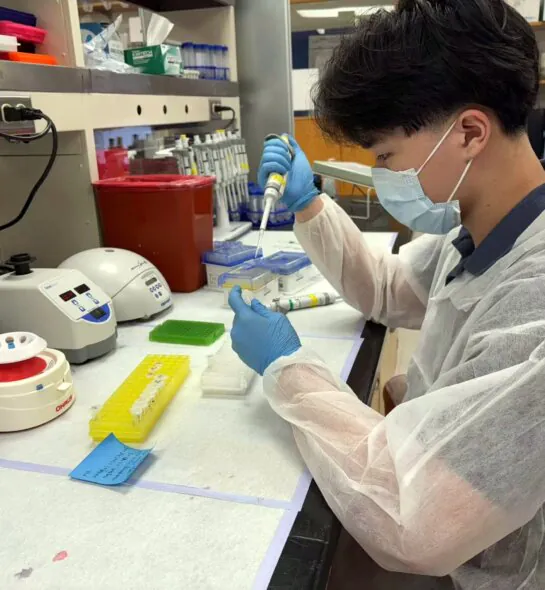
Many current diagnostic tools rely on sputum samples, which can be inconsistent in quality and difficult or impossible to obtain. Up to 90% of younger children are unable to cough up sputum voluntarily, and the same is true for many immunocompromised patients. My project addresses that barrier by shifting the sample type from sputum to blood serum. I built a diagnostic platform that targets circulating cell-free DNA using polymerase chain reactions and CRISPR Cas12a. Using specially designed guide RNAs, my assay can identify drug-resistant mutations in TB with single-nucleotide specificity. Paired with my microfluidics chip, the platform can screen hundreds of reactions for multiple mutations at once, making the assay both multiplex and high-throughput. During validation, M-CATCH achieved extremely high sensitivity and specificity when detecting tuberculosis in samples compared with conventional diagnostic methods.
I encountered many challenges while completing this work, but the CRISPR guide RNAs were the most difficult component. Many looked promising on paper but underperformed in experiments, which was not surprising given that some of the mutations I was targeting differ by a single nucleotide. I tested countless guides for weeks. It was slow and frustrating, but it was rewarding.
Children, immunocompromised patients and people in resource-scarce areas could benefit from M-CATCH. By addressing the limitations of sputum-based testing, my work could make diagnostics more accessible and allow patients to be screened at a larger scale. I also hope to expand beyond tuberculosis by developing diagnostic panels for other infectious diseases and even cancer. By redesigning the CRISPR Cas12a guide RNAs, the platform could target other cell free DNA strands within blood. Combined with the multiplex nature of the assay, this approach could ultimately screen for a range of pathogens and diseases, increasing diagnostic speed, access and scope.