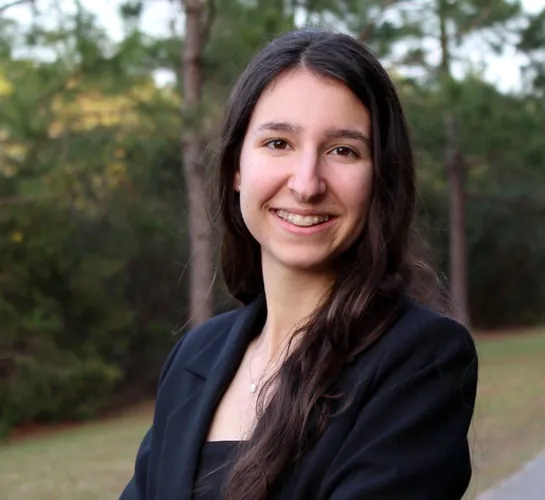
Isabel Garcia

Isabel Garcia

2026 Davidson Fellow
$25,000 Scholarship

Age: 18
Hometown: Wilmington, NC

Science: "Identification of Coral Bacteria McH1-7, OfavHM2-11 and McHM3-18 as Probiotic Candidates Capable of Inhibiting the Pathogen Vibrio cholerae (Serogroups O1 and O139) for Cholera Water Sanitation"

About Isabel

I’m an avid adventurer, whether I’m exploring microbiology, languages or countries. I have a lifelong passion for microbiology, particularly environmental microbiology, and enjoy competing in science competitions. I also love learning languages and collecting socks from each country I visit.

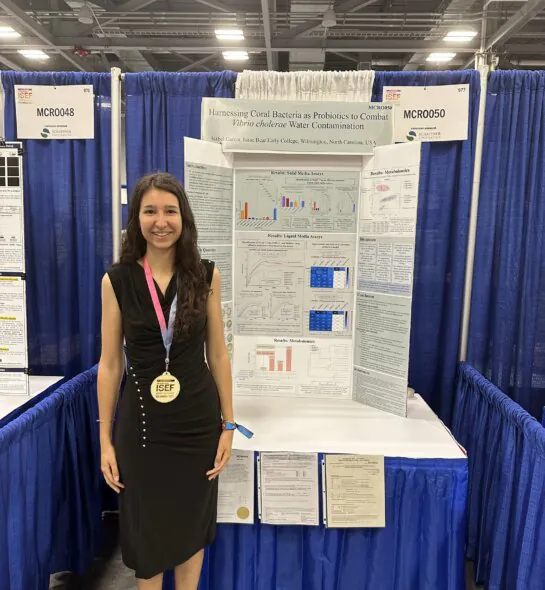
This fall, I will attend Duke University and the University of North Carolina at Chapel Hill as a Robertson Scholar. I am interested in studying biology and business, followed by an MD/PhD program. My research has received four Grand and Special Awards at Regeneron ISEF, and I helped launch the National STEM Festival Student Council.

Outside of research, I lead RxRecycle’s Wilmington, North Carolina, operations, helping recycle hundreds of pounds of materials each month. I also run a free tutoring service for Hispanic students and adults in my community. In my free time, I continue learning languages, including Spanish, Hindi and Arabic.

Skip testimonial carousel

"Being a Davidson Fellow means I have support: support for my research, support from a community of brilliant and like-minded individuals and support to continue pursuing my dreams. I hold immense appreciation for this honor and will use this support to ensure that I continue making positive scientific change."

Project Description

1.8 billion people worldwide are at risk for cholera, a preventable diarrheal disease that persists due to a lack of effective water sanitation methods. We have observed increased sporadic cases of Vibrio cholerae serogroup O139, a serogroup that almost precipitated the eighth cholera pandemic in the early 1990s and has the potential to become prevalent again.

To address this, I investigated four coral bacteria, McH1-7, OfavHM2-11, OfavHM2-17 and McHM3-18, for their efficacy as probiotic candidates against strains associated with the seventh and potential eighth pandemics. McH1-7, OfavHM2-11 and McHM3-18 were identified as candidates for inhibiting V. cholerae, especially when compared with chloramphenicol, the positive control, in solid and liquid environments. This discovery has the potential to address V. cholerae contamination at its primary source, environmental reservoirs, to help prevent a potential eighth cholera pandemic.

Deeper Dive

My project works to solve the potentially imminent issue of Vibrio cholerae serogroup O139 proliferation and infection in water reservoirs. I relied on coral-isolated marine probiotics in solid and liquid media assays to assess their efficacy against strains of Vibrio cholerae and identified significant efficacy across three out of four screened probiotics. The results of this project help ensure that we understand and possess a possible treatment in cholera prevention for a strain whose future implications we know little about.

I grew up hearing my grandmother’s stories of cholera outbreaks at the Dominican Republic and Haiti border and was concerned when I read the World Health Organization’s 2024 declaration regarding serogroup O139. As I began to research the topic, I recognized the global impact an eighth cholera pandemic would have, especially given the potential lack of appropriate water sanitation methods or antibiotics. I was inspired by the more than 1.8 billion people whose lives could become even more at risk.

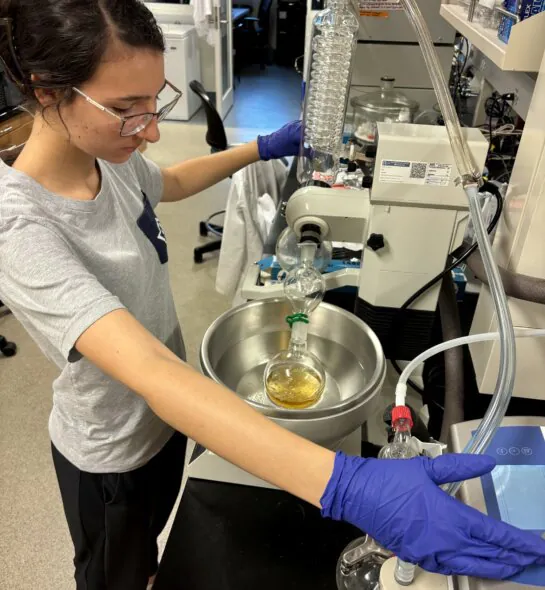
My Davidson Fellows project was not without difficulty. My work in the wet lab resulted in many lab days filled with unexpected results or errors that often led to an entire experiment needing to be redone. With each of these setbacks, I gained valuable experience and knowledge that allowed me not only to become a better scientist but also to broaden my project scope.

Having access to advanced university-level coursework, like chemistry and the microbiology of human disease, provided insight into paths I could explore in my project.

This project has the potential to help prevent or halt a potential eighth cholera pandemic by targeting Vibrio cholerae in water reservoirs. The identified probiotic strains McH1-7, OfavHM2-11 and McHM3-18 could provide a possible approach to addressing the bacteria in these environments. Particularly, McH1-7 is a prime candidate for solid environmental surfaces, such as copepods or other organisms that Vibrio cholerae is known to inhabit or infect. McH1-7, OfavHM2-11 and McHM3-18 supernatants could be used for the planktonic, or free-floating, forms of Vibrio cholerae existing within the water in reservoirs, thus addressing the issue at its point of origin.

Q&A

What is your favorite tradition or holiday?

Every New Year’s my mom and I create a vision board for the year from magazine clippings. I’ve done it for as long as I can remember and it’s a wonderful way to set the tone for the year. 

What is your favorite hobby?

I love to make travel itineraries for my friends and family. I develop these extensive hour-by-hour and day-by-day itineraries for travel all over various countries.

If you could magically become fluent in any language, what would it be?

Mandarin. I spent my junior summer trying to master the tones and unfortunately, they haven’t quite clicked yet.  

Click image to download high resolution files

In The News

Isabel Garcia, 18, of Wilmington, has been awarded a $25,000 Davidson Fellows Scholarship for the science project, Identification of Coral Bacteria as Probiotic Candidates Capable of Inhibiting Vibrio cholerae for Cholera Water Sanitation. The Davidson Fellows Scholarship is one of the nation’s most prestigious honors for students 18 and younger.

Download the full press release here