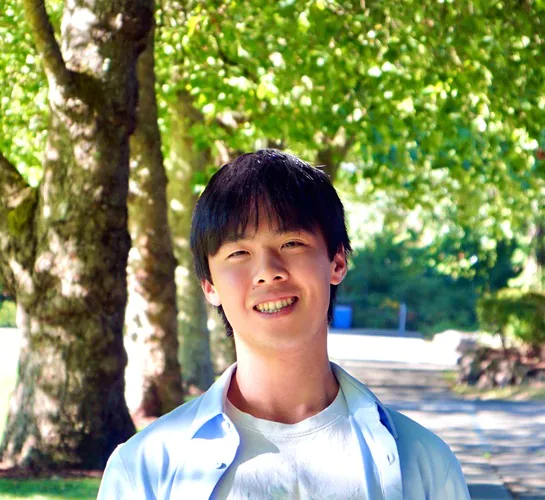
Khaos Kook

Khaos Kook

2026 Davidson Fellow
$25,000 Scholarship

Age: 18
Hometown: Shoreline, WA

Music: "Breaking Barriers and Biases: Deconstructing the “Classical Musician” of the 21st Century"

About Khaos

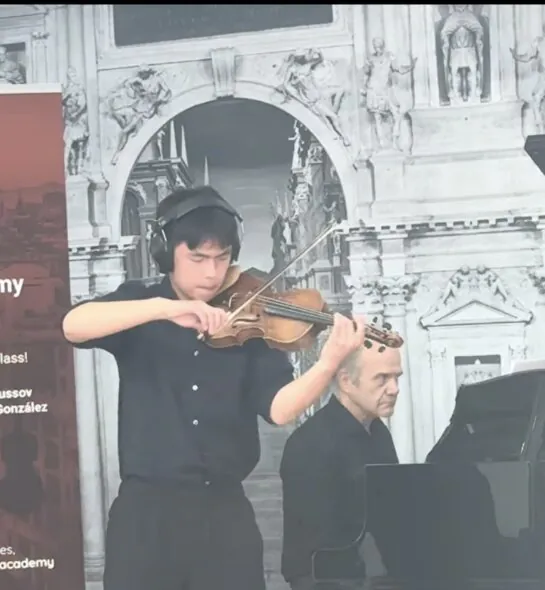
I’m Khaos Kook! I’m 18, from Shoreline, Washington, and am a violinist, writer, researcher and community organizer drawn to the intersections of different disciplines. Classical music has shaped my perception of the world for over 14 years, but in 2024, a serious head injury forced me to reconsider what it means to be a musician.

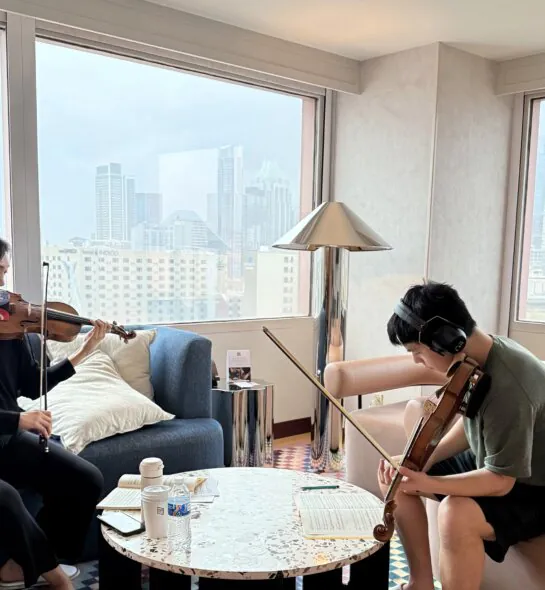
I have studied at international music institutes including Heifetz, Keshet Eilon and Mozarteum’s ISA and conducted musician hearing health research through Mass Eye and Ear under Dr. Sharon Kujawa. These experiences have encouraged me to approach music as an interdisciplinary field with potential for social impact. In college, I hope to study English and music while continuing to explore across disciplines.

Outside of my work, I love skiing, cheering for Tottenham Hotspur and spending time with my Goldendoodle and Aussie Shepherd. I have been invited to solo with seven professional orchestras across the U.S. and Europe and was named a 2026 YoungArts Winner with Distinction in Classical Music. I am also a nationally recognized poet and essayist and lead hearing health seminars and advocacy efforts. Ultimately, I hope to build a career combining artistry, research, writing, entrepreneurship and public service.

Skip testimonial carousel

"Being named a Davidson Fellow in Music is especially meaningful to me because my work was born from a period of my life when a serious head injury left me without access to classical music, an integral part of my identity for more than fourteen years. To me, the fellowship provides valuable affirmation that adversity can be turned into a powerful source of inquiry in any discipline or field!"

Project Description

I interrogate a relatively simple question in my project: What makes someone a musician when they can no longer perform? Following a head injury that prevented me from playing violin for over half a year, I explored ways musicians and newcomers can remain deeply engaged with music through listening, historical research, score study, scientific inquiry, teaching, advocacy and other forms of participation.

In an effort to turn my own recovery into a practical resource for others, I developed an evidence-based return-to-instrument protocol as part of a research paper, addressing the lack of structured support for musicians recovering from concussion. Ultimately, my project challenges the notion that musicianship is defined only by performance, proposing a broader model that can help different groups of musicians remain connected to their craft while making classical music more welcoming to a wider public.

Deeper Dive

My project began after a concussion and seizure prevented me from playing violin for over half a year and required a year of medical leave from school. Having spent a decade and a half practicing, I asked myself if I could still call myself a musician if I could no longer play. Over sixteen months, I examined classical music’s tendency to equate musicianship with continuous physical performance and practice. Through score study, historical research, scientific inquiry, listening, community engagement and a gradual return-to-physical practice and performance, I developed a broader framework of musicianship based on sustained artistic, intellectual and social engagement. The project also contributed to my development of an original return-to-instrument recovery protocol for musicians recovering from traumatic brain injury.

Beginning work while still in recovery was this project’s greatest challenge. My progress was rarely straightforward, as concussion symptoms limited cognitive and physical exertion. Returning to a full academic schedule after a year away also forced me to manage my energy carefully and more readily accept gradual progress. My parents, violin teachers, accompanists and medical professionals provided valuable company and guidance, while skills developed through mentors both in and out of school aided me in researching, writing and synthesizing cross-disciplinary ideas.

I envision my work broadening both access to and participation in classical music. Injured, disabled, aging or otherwise constrained musicians should not feel that their identity as a “musician” disappears when performance becomes difficult or impossible. On the scientific side, my return-to-instrument protocol provides practical, music-specific guidance, something currently lacking in the scientific concussion literature, while the project’s broader structure aims to encourage people to engage with music through research, education, advocacy, listening and community work. I’ve applied this philosophy through Project CliKK, the music nonprofit I founded to broadly expand access to high-level music education.

Q&A

If you could have dinner with the five most interesting people in the world, living or dead, who would they be?

  • Jesus of Nazareth
  • Muhammad
  • Gaius Octavius 
  • Confucius 
  • Socrates

What is your favorite food?

Galbijjim (Korean braised beef short ribs)

What is your favorite hobby?

Off piste skiing with 1 or 2 friends!

Click image to download high resolution files

In The News

Three Washington teens have been named 2026 Davidson Fellows, one of the nation’s most prestigious honors for students 18 and younger. Aditya Sengupta and Bryan Zhu of Bellevue and Khaos Kook of Shoreline will share $150,000 in scholarships.

Download the full press release here