

Deeper Dive
My work, Automated Prediction and Prevention of Pressure Injuries Using Machine Learning and Thermal Sensing: A Clinical Validation Study, focuses on pressure injuries, one of the most persistent and costly challenges in health care. These injuries create a significant need for objective methods to detect tissue damage before it becomes irreversible. Because subdermal tissue deterioration can precede visible surface damage, current prevention protocols that rely on risk assessment and visual inspection may identify injuries after the critical window for intervention has begun to close. Pressure injuries affect approximately 2.5 million patients annually in the United States, contribute to an estimated 60,000 deaths each year and impose over $26 billion in health care costs. They disproportionately affect elderly, immobile and critically ill patients while consuming scarce nursing resources through rigid repositioning schedules applied across entire units. My work uses machine learning and thermal sensing to detect patient positioning, identify risk and alert nurses when patients need to be turned, helping direct clinical intervention more accurately and efficiently to where and when it can prevent harm.
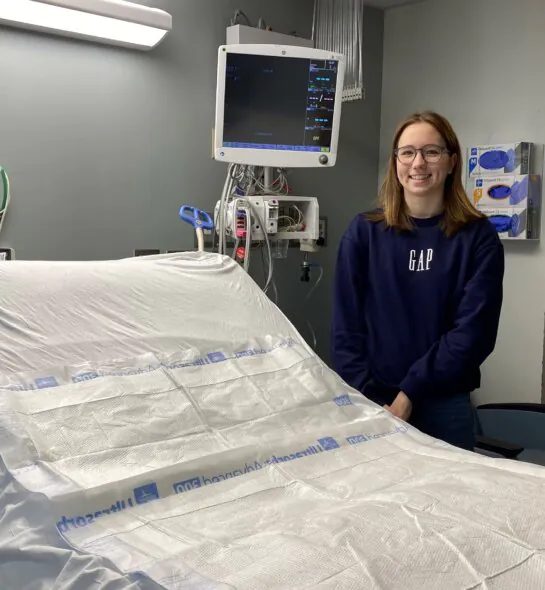
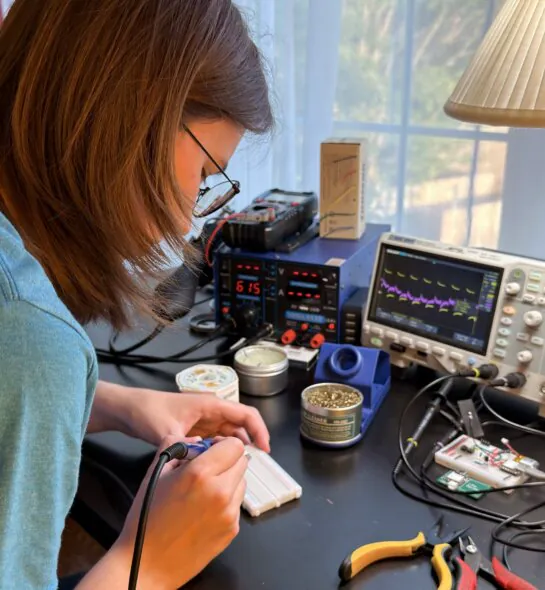
My project’s biggest challenges came from working across two very different worlds: large scale data science and the physical reality of a hospital ICU. The MIMIC-IV dataset I used for predictive modeling was severely imbalanced, with about 3,900 pressure ulcer cases compared with more than 90,000 negative ICU stays. I combined SMOTE oversampling with undersampling and tested 10 classification models to build predictions that would not ignore the minority class. Clinically, I faced a hurdle few high school researchers encounter: completing human-subjects training and writing an IRB protocol, which I developed with Dr. Steven Conrad and Dr. Kimberly Hutchinson at LSU Health Shreveport. Because IRB rules barred me from the hospital Wi-Fi network, I reengineered my device as a self-contained wireless system running entirely within the patient’s room. The study itself revealed another challenge: raising the head of the bed moved patients out of my thermal sensor’s view, prompting me to redesign the mount and consolidate my hardware into a single integrated circuit board.
Pressure injuries harm people who may be least able to advocate for themselves, including ICU patients too unstable to move, nursing home residents with limited mobility and homebound individuals cared for by overstretched family members. My work aims to improve their quality of life by identifying tissue damage before it becomes a wound, potentially sparing patients painful treatment and surgeries. My work also addresses one of the scarcest resources in health care: caregiver time. In ICUs, my system can help direct nurses to patients who need repositioning. In nursing homes and long-term care facilities, it could provide continuous monitoring when staffing is limited. At under $130, the system could also make advanced pressure injury prevention more accessible in home care, where families may have little or no clinical training.