

Deeper Dive
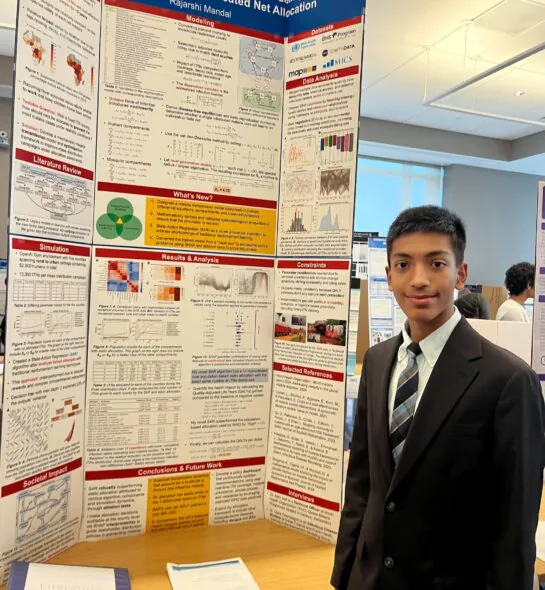
I started this project after watching New York Times footage of fishermen weaving donated nets into dragnets because they were the only fish mesh available. Roughly 200 million insecticide-treated nets are distributed each year, mostly based on population. This approach ignores insecticide resistance, seasonal surges in transmission and net decay. That is why I developed a malaria transmission simulation that accounts for all three and used it to create allocation policies for a fixed supply. With the same number of nets, my allocator prevented twice as many cases as current practice. Nets are already a cost-effective malaria intervention, so optimizing their distribution could save more lives without increasing the budget.
I began with a Deep Q Network, but each allocation’s outcomes were affected by noise and delayed rewards, preventing the value estimates from converging. I eventually replaced it with a new architecture that scored candidate allocations directly to avoid the instability. Earlier, malaria prevalence in my simulation kept falling to zero, which did not reflect endemic regions. Dr. Clara Champagne from the Swiss Tropical and Public Health Institute suggested I investigate backward bifurcation. I derived the transmission model’s reproduction number and confirmed the simulation could sustain transmission at realistic biting rates. Through the Non Trivial Research Scholars Program, I also learned to evaluate my own impact claims and better understand operational realities from people working in the field.
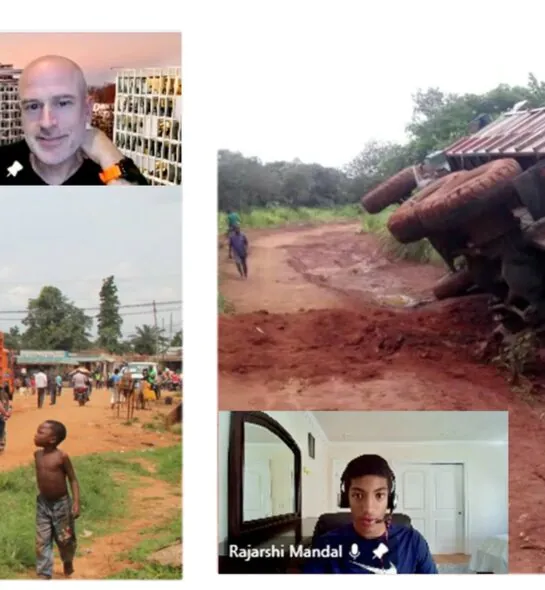
What surprised me most about malaria is how rarely it is fatal. The mortality rate is around 0.2%, meaning most infections instead lead to weeks of fever and anemia. Farmers may miss planting season, shopkeepers may have to close their stores and students may miss school or stay home to care for a sick sibling. Every net that reaches a high-transmission area can help prevent some of that. My framework projects where cases could spike and accounts for tradeoffs involving insecticide resistance, seasonality and remoteness. Dr. Seth Irish, a technical officer at the WHO Global Malaria Programme, showed me a picture he took of a transport truck overturned on a road in the Democratic Republic of Congo, its nets spilled. It is impossible to account for every operational disruption, but I can help maximize the impact of the nets that do arrive.