


Deeper Dive
Our research was inspired by the traumatic experience of seeing our loved family members endure debilitating injuries from falls. Exploring deeper, we discovered that falls are the leading cause of injury and injury-related death among older adults. According to the CDC, one in four older adults falls every year, resulting in 9 million injuries and costing over $80 billion annually in the United States alone. Yet, standard clinical fall risk assessments require older adults to travel to medical facilities, which can be a challenge, and the evaluations are inherently subjective and dependent on physician availability. Consequently, most individuals are screened only once a year, an infrequent interval that makes it difficult to capture the rapid, dynamic physiological declines that precede a fall. Furthermore, existing technologies like medical alert wearables are strictly reactive, notifying help only after a fall has already occurred.
To shift fall prevention from reactive treatment to continuous, proactive screening, we developed SafeStrides, a mobile application and sensor ecosystem that automates and streamlines the entire assessment process. SafeStrides provides step-by-step guidance, synchronizes real-time video and sensor data and delivers instant, AI-powered evaluations directly on a smartphone. Beyond automated screening, the system provides users with practical and easy-to-follow recommendations to improve mobility and optimize their home environments. By combining accessible screening with proactive prevention, SafeStrides replaces inconsistent clinic visits with continuous, data-driven fall risk management both at home and in clinical settings. Ultimately, this scalable solution enables early risk detection and timely intervention, empowering older adults to preserve their independence while reducing preventable injuries.
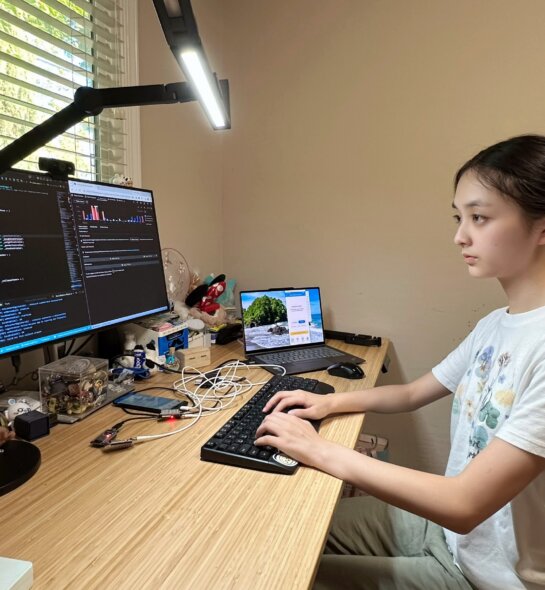
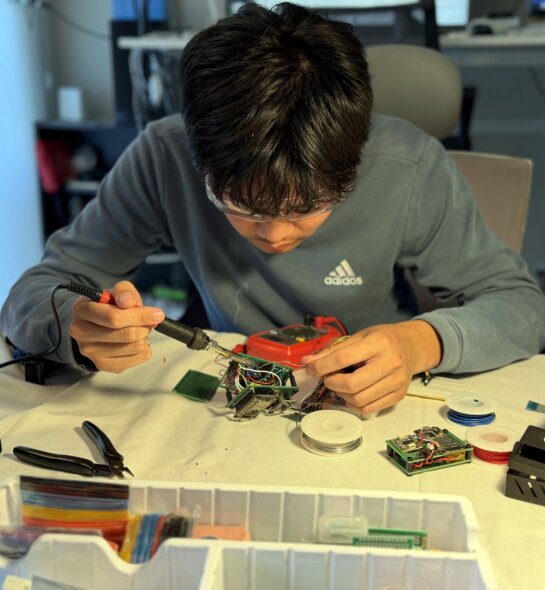
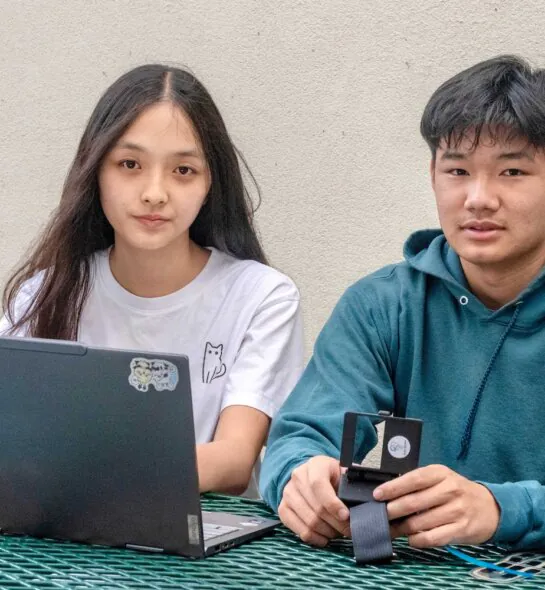
During the development of SafeStrides, a major challenge was transitioning from a basic proof of concept to a compact, nonintrusive, real-time wearable gait monitoring system. While functional, our initial Arduino-based prototype was bulky and limited to offline post processing. We made significant improvements to our second-generation system by integrating IMUs and pressure insoles with an ESP32 microcontroller and Bluetooth modules. We further improved the structural design in the third generation, ultimately producing a compact, lightweight sensor system that ensures comfortable, nonintrusive wear. In parallel, we built a cross-platform Flutter mobile application to interface directly with the wearable hardware via Bluetooth. The app automatically synchronizes high-frequency sensor streams with live camera feeds, collecting all data required for comprehensive evaluation while establishing a unified diagnostic framework.
SafeStrides delivers a comprehensive solution for the world’s 1.2 billion older adults. It transforms fall prevention from the current model of occasional clinic-based screenings, often inaccessible, time consuming and inconsistent, into a continuous, data driven and user-friendly system that works both at home and in clinical settings. With real time, high-precision monitoring powered by multimodal AI, SafeStrides not only identifies fall risk early but also empowers older adults to proactively manage their mobility and safety. In clinics, medical assistants can leverage SafeStrides to conduct objective fall risk evaluations without requiring direct physician involvement, improving the efficiency, scalability and consistency of screenings. By bridging the gap between everyday living and clinical care, SafeStrides enhances independence, reduces preventable injuries and has the potential to significantly improve quality of life on a global scale.