By: Annie Sousa, LGPC
As both a psychotherapist and a parent of twice-exceptional children, I see the same pattern from two directions. My clients arrive in adulthood carrying the scars of an education system that never fit them. My own children, bright, creative, and intensely curious, struggled in traditional classrooms that treated their questions and intensity as problems to manage rather than strengths to cultivate. They now attend FlexSchool, a school intentionally designed for gifted and twice-exceptional learners who don’t fit the old mold.
Watching them there, and listening to the stories of neurodivergent adults in my practice, I keep coming back to the same unsettling question: Why are we still running schools as if the future our kids are walking into looks anything like the past?
School as a training ground for a vanished world
For more than a century, American schooling has been shaped by industrial-era values: efficiency, standardization, centralized control, and uniform measures of performance. In the last few decades, test-based accountability has intensified that logic. Standardized tests in reading and math became the core measure of success; schools are ranked, funded, and judged based on how well students perform on those narrow metrics.
Inside the classroom, that often translates into:
- Emphasis on correct answers over deep questions
- Memorization and test prep over exploration
- Deference to authority over independent judgment
Students learn to sit still, follow directions, fear being wrong, and perform on cue. Many become exceptionally good at reading what the adult in the room wants and producing it on demand. That might have made sense in a world of stable nine-to-five jobs, predictable career ladders, and long-term employment in large organizations. But that world is disappearing.
When “success” is defined by the wrong test
The problem with these tests is not only how much power we give them, but what they actually measure. Standardized tests are very limited tools for capturing real intelligence, creativity, or readiness, especially for twice-exceptional (2e) students. “Twice exceptional” describes gifted children who also have learning differences or disabilities such as ADHD, autism, dyslexia, slow processing speed, or significant anxiety.
These students can have very advanced reasoning and deep understanding while at the same time struggling with timed tasks, written output, working memory, or managing test anxiety. The result is often depressed test scores that reflect challenges with speed, attention, or sensory overload more than their actual thinking ability. Research and field reports show that many 2e students are never identified as gifted, or are misjudged as “average,” “unmotivated,” or “lazy,” because their disabilities deflate their standardized test performance.
In other words, the very students we most need for a future that depends on innovation and complex problem-solving are among the ones our current metrics are most likely to overlook, misunderstand, or push out.
When a system is organized around who can sit still, memorize, and perform on a narrow exam window, it doesn’t just miss kids like these, it actively penalizes them. It rewards compliance over curiosity, speed over depth, and “fitting the mold” over thinking differently. That might have made sense in an era that believed it needed obedient factory workers. But in a world of AI, automation, and constant disruption, doubling down on compliance is not just outdated, it is actively misaligned with the skills tomorrow’s adults will need.
What psychology tells us about how kids actually learn
Decades of research in educational psychology paint a different picture of effective learning. Self-Determination Theory, developed by Edward Deci and Richard Ryan, proposes that humans have three basic psychological needs—autonomy (a sense of choice), competence (feeling effective), and relatedness (feeling connected to others)—and that environments which support these needs foster higher-quality motivation, engagement, and well-being. Environments that rely primarily on external rewards and punishments—grades, gold stars, fear of failure—can undermine intrinsic motivation and curiosity.
Montessori and other child-centered approaches offer a real-world test of this. When Montessori programs are implemented with fidelity, children often outperform peers from traditional schools in academic achievement, creativity, and social skills. Studies find that these students show stronger problem-solving, better executive functions (such as planning and self-control), and higher enjoyment of school. They spend their days engaged in self-directed, hands-on work, making choices, correcting their own mistakes, and grappling with real problems instead of simply memorizing answers.
Growth mindset research adds another crucial piece. When students believe their abilities can be developed through effort, strategy, and feedback, they are more resilient in the face of setbacks, more likely to seek challenges, and better able to sustain motivation over time. They do not crumble when something is hard; they adjust. For twice-exceptional students, who often experience intense asynchrony and many early school struggles, this kind of mindset, paired with appropriate support, can be especially protective.
In short, psychological and educational research suggest that:
- Autonomy and meaningful challenge deepen learning and engagement
- Problem-solving and creativity can be cultivated through the right environments
- Beliefs about growth and effort shape resilience and long-term success
Yet these are often precisely the experiences crowded out by high-stakes testing and compliance-driven classrooms.
The future of work: why compliance is becoming a liability
Now place these findings next to what we know about the future of work. Analyses of AI and automation repeatedly show that routine, rule-based, and predictable tasks are the easiest to automate. Reports on the future of jobs highlight a rising premium on skills like analytical thinking, creative problem-solving, technological literacy, collaboration, resilience, and self-management.
In other words:
- Machines are increasingly capable of memorization, pattern recognition, and repetitive procedures
- Humans remain uniquely valuable where there is ambiguity, novelty, ethical complexity, and emotional nuance
Training children primarily to follow instructions, avoid mistakes, and reproduce known answers prepares them for the very slice of the labor market that is shrinking fastest. Preparing them to ask hard questions, generate new ideas, work across disciplines, and adapt to constant change prepares them for the parts of the future only humans can inhabit.
For gifted and twice-exceptional students, whose strengths often lie in exactly these higher-order capacities, the stakes are especially high. When we ask them to trade away curiosity and creative thinking in order to fit into a narrow system, we are asking them to surrender the very skills the future will most require.
What schools like FlexSchool are doing differently
FlexSchool is one example of a model that tries to align with this emerging reality. It is explicitly designed for bright, creative, and often twice-exceptional students who struggle in conventional classrooms but thrive when their strengths are recognized and their differences are supported. Core elements include:
- Small, discussion-driven classes where questioning and debate are encouraged
- Individualized pacing and differentiated work that meet students where they are
- Built-in executive function coaching to support planning, organization, and self-regulation
- A strong focus on social-emotional learning and community for students who may have felt isolated or “too much” elsewhere
In practice, that means students regularly tackle open-ended problems, negotiate meaning with peers, manage their own projects, and recover from missteps. They are rehearsing the cognitive and emotional skills that psychological research identifies as crucial for long-term learning and for thriving in an AI-shaped economy.
FlexSchool is not the only model doing this work. Many educators and programs are experimenting with new approaches to support gifted and 2e learners. But schools like this highlight a simple truth: when we design environments around how complex, asynchronous minds actually learn, rather than around what is easiest to standardize and measure, students who once looked “difficult” often reveal themselves as remarkably capable.
A reality check for all of us
Families and educators may differ on school choice and philosophy. But certain realities are hard to ignore. The world our children are entering is volatile, uncertain, and deeply intertwined with technology. The safest investment we can make in their future is not compliance, but flexibility; not perfectionism, but resilience; not memorization, but the ability to learn and relearn.
For gifted and twice-exceptional students in particular, this means:
- Environments that provide autonomy, meaningful challenge, and supportive relationships to develop strong motivation and deep learning
- Opportunities to practice problem-solving, creativity, and reflection so they become more adaptable and better equipped to face novel challenges
- Intentional cultivation of growth-oriented beliefs and skills to support resilience in the face of the inevitable disruptions ahead
We can keep pretending that an education system optimized for standardized tests and obedience will somehow produce thriving gifted and twice-exceptional adults in a world of AI, robotics, and rapid change. Or we can acknowledge what the research, and our students’ lived experience, already show us and start building schools that prepare them not just to survive the future, but to shape it.
Selected Research and Resources
Twice-exceptional identification and test performance
- National Education Association. (2006). Twice-Exceptional Dilemma.Washington, DC: NEA.
- Foley Nicpon, M., Allmon, A., Sieck, B., & Stinson, R. D. (2011). Non-cognitive characteristics of gifted students with learning disabilities: An exploratory study. Roeper Review, 33(3), 190–199.
- Assouline, S. G., Foley Nicpon, M., & Doobay, A. F. (2010). The Paradox of Twice-Exceptionality: High Ability and Disability in the Same Person.Iowa City, IA: Belin-Blank Center, University of Iowa.
Self-Determination Theory and basic psychological needs
- Deci, E. L., & Ryan, R. M. (2000). The “what” and “why” of goal pursuits: Human needs and the self-determination of behavior. Psychological Inquiry, 11(4), 227–268.
Montessori education, academics, and executive function
- Lillard, A. S., & Else-Quest, N. (2006). Evaluating Montessori education. Science, 313(5795), 1893–1894.
- Lillard, A. S. (2017). Montessori education: A review of the evidence base. npj Science of Learning / Frontiers in Psychology, 2, 11.
Growth mindset, resilience, and challenge-seeking
- Dweck, C. S. (2006). Mindset: The New Psychology of Success.New York, NY: Random House.
- Yeager, D. S., & Dweck, C. S. (2012). Mindsets that promote resilience: When students believe that personal characteristics can be developed. Educational Psychologist, 47(4), 302–314.
AI, automation, and future-of-work skills
- World Economic Forum. (2025). The Future of Jobs Report 2025.Geneva, Switzerland: World Economic Forum.
- International Monetary Fund. (2026). New skills and AI are reshaping the future of work.IMF Blog.
About the Author
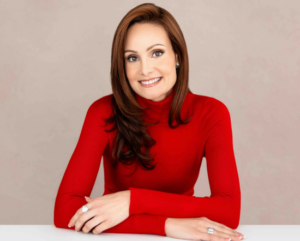 Annie Sousa, MA, LGPC, is a psychotherapist and coach specializing in trauma-informed, neurodiversity-affirming care for adults and families. A parent of twice-exceptional children, she is the founder of Unmask Your Mind, where she writes, hosts a podcast, and teaches about neurodivergence and education.
Permission Statement
This article was reprinted with the permission of the author.
This article is provided as a service of the Davidson Institute for Talent Development, a 501(c)3 nonprofit dedicated to supporting profoundly gifted young people 18 and under. To learn more about the Davidson Institute’s programs, please visit www.DavidsonGifted.org.
Comments