Davidson Institute for Talent Development
This article by the Davidson Institute for Talent Development, discusses the background, mission, programs and services of the Institute. Included is an explanation of the Institute's rationale and approach. It also offers some insights about supporting the profoundly gifted population.
If they learn easily, they are penalized for being bored when they have nothing to do; if they excel in some outstanding way, they are penalized as being conspicuously better than the peer group. The culture tries to make the child with a gift into a one-sided person, to penalize him at every turn, to cause him trouble in making friends and to create conditions conducive to the development of a neurosis. Neither teachers, the parents of other children, nor the child peers will tolerate a Wunderkind.
Margaret Mead,1954
What Margaret Mead observed nearly a half a century ago about the lack of support for intellectually precocious children in our society still holds true today. Our most able students, those with the greatest potential, are very often seriously neglected. Schools are ill equipped to serve profoundly gifted children because they seldom encounter them. According to Gross (1993), individuals with an IQ of 160+ appear in the population at a ratio of fewer than 1 in 10,000. Those with an IQ of 180+ appear in the population at a ratio of fewer than 1 in a million.
Many schools have policies against acceleration or skipping grades, even though the research is clear that acceleration is a viable and workable way to address the educational needs of a PG child (Elkin, 1988; Gross, 1992b; Benbow & Stanley, 1996). Schools are often resistant to making special accommodations such as curriculum compacting and individualization for profoundly gifted children. Instead of providing them with learning experiences reflective of their intellectual development, many well-meaning educators give them the role of teacher's aid, often asking them to help less capable students, whose learning styles are very different, or worse yet, in an attempt to satisfy the PG child's rage to learn, assign additional, yet developmentally inappropriate, work on the same content. All too often the profoundly gifted child is expected to stay in the age-appropriate grade and relearn material they've already mastered. Too often schools are unable to provide the profoundly gifted child with a learning environment that is rigorous enough to appropriately challenge his or her abilities.
The popular perception is that profoundly gifted children, because of their high level of intelligence, should be able to fend for themselves. However, research findings show that this is not the case. (Feldman, 1979; Robinson, 1981; Bloom, 1982; Wernick, 1989; Gross, 1992a; Lovecky, 1992; Gross, 1999; Neihart, 1999; Gross, 2000; Osborn, 2000). All children should be nurtured and supported to reach their full potential, including those with the highest potential. To discriminate against children because of their intelligence level is as wrong as discriminating against them because of their race or religion.
Background The Davidson Institute for Talent Development was founded by Jan and Bob Davidson out of a concern that our nation's most gifted and talented young people are largely neglected and underserved. As former educational software entrepreneurs, Jan and Bob are passionate about our society's responsibility to provide its youth the opportunity to develop their intellectual talents. When they found how little educational support was actually provided for American's brightest young people, they decided to do something about it. They have contributed significant financial resources as well as their time and energy to serving the profoundly gifted. Jan and Bob's day to day involvement with the Institute, their devotion to fulfilling its mission, and their entrepreneurial leadership contribute significantly to what our team is able to accomplish.
The Institute's work is based upon their beliefs that: (a) all children should be lovingly nurtured in a safe, supportive environment where each child is accepted and appreciated as a unique individual; (b) all children should have an opportunity to develop their talents in positive ways to create value for themselves and others; (c) the special needs of profoundly gifted children should be recognized and accommodated and their uniqueness should be understood and nurtured; and (d) they should be allowed to learn at a rate appropriate to their abilities. Like all children, profoundly gifted children should have the opportunity to be challenged to excel and achieve.
Our Mission The mission of the Davidson Institute for Talent Development is to recognize, nurture and support profoundly gifted young people and to provide opportunities for them to develop their talents in positive ways to create value for themselves and others.
We use the term "profoundly gifted" to mean individuals with an extremely high level of intellectual precocity. These individuals are identified by demonstrating mastery of a significant amount of content in a particular domain, far beyond the norm for the child's age group, or by a score in the top .001% of their age-peers in a particular domain, as measured by an intelligence or achievement test.
What We Do: An Overview of Our Programs and Services The Davidson Institute's programs and services continue to expand and evolve as we discover new ways to more effectively achieve our mission. The following is a list of the programs and services we offer. For the most up-to-date information on our programs and services please visit our website at www.davidson-institute.org.
Davidson Young Scholars Program The aim of the Young Scholars program is to support the educational and developmental needs of profoundly gifted young people. Children between the ages of four and sixteen are eligible to apply for this individualized intensive support program. Each Davidson Young Scholar has an action plan developed in concert with the Young Scholar, his/her parents and a team of experts. This dynamic document is an instrument designed to help each Young Scholar's parent(s) address their child's needs academically, socially, emotionally, and in the Young Scholar's talent/interest areas. Financial assistance is available on a needs basis to help with the implementation of the action plan. Program participants also have access to a variety of online seminars, list serves, and private websites. The highlight of the Young Scholars experience, however, are the gatherings. During the gatherings, parents and Young Scholars come together for a weekend to participate in facilitated sessions, explore the great outdoors and relax and visit with true peers.
Davidson Gifted Database The Institute, along with the help of our Davidson Young Scholars, their parents, and professionals in the field have created a web-based, searchable database of information, including 500-plus articles, and a wide variety of resources for and about profoundly gifted young people, complete with a place to recommend resources and add comments to existing records. This interactive and invaluable resource can be experienced at www.DavidsonGifted.org/DB.
Davidson Fellows Award Encouraging PG young people to develop their talents in positive ways to create value for themselves and others is fundamental to the work of the Davidson Institute. Therefore, students who demonstrate an extraordinary ability to develop their talents with the creation of a significant piece of work in the areas of technology, mathematics, science, music, literature, philosophy and/or in an "out of the box" category, are eligible to be recognized as Davidson Fellows and receive a substantial scholarship.
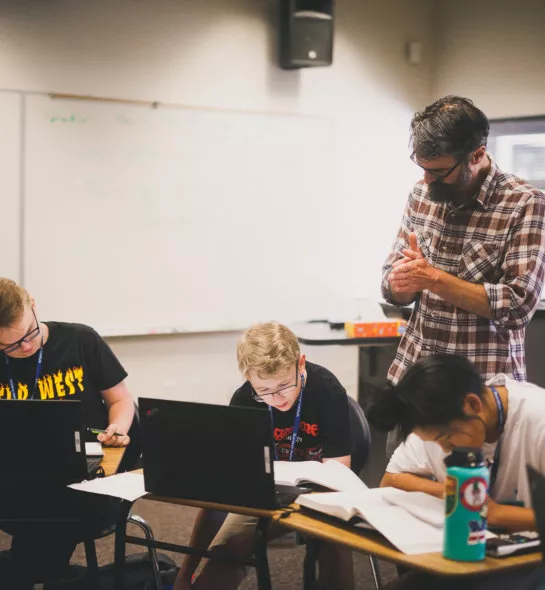
THINK Summer Institute The Davidson Institute for Talent Development and the University of Nevada, Reno are pleased to offer the THINK Summer Institute. This three-week residential summer program offers 7th, 8th, and 9th grade students an opportunity to access an extremely rigorous educational experience. Participants who complete the program with receive transferable college credits.
Ed Guild Because we want all PG children to have quality educational experiences, the Institute provides services for professionals seeking information about the profoundly gifted and their needs including presentations, in-service trainings, expert opinions, and referrals to experts in the field.
What We Have Learned Although the Davidson Institute has only been actively supporting PG children since 1999, our intensive experience working with parents, children and professionals has allowed us the opportunity to learn a great deal about this population. The three most basic lessons we have learned are:
Lesson One: There is no stereotypical profoundly gifted child. Profoundly gifted children have but one universal trait: their ability to learn quickly and deeply. PG children can focus intently for long periods of time when they are learning something that is of great interest to them and they master a significant amount of material in a relatively short period of time.
Outside of this, they are as unique and different as any other randomly selected group of children (Robinson, 1981). The profoundly gifted children we serve come from a variety of ethnic groups, races, and economic levels; currently 67% of the participants in our program are male and 33% female. They come from all sections of the country, from both urban and rural areas. Some are highly gifted in multiple domain areas. Others are highly gifted in a single domain area. Some are highly gifted and learning disabled. Some have highly developed social skills, others have limited social skills. Some are perfectionists, others are quite comfortable taking risks and making mistakes. Some are highly sensitive and suffer from an unkind act or thoughtless remark, others are less affected. Many are highly athletic; many are highly musical; many are highly verbal; many are early readers; many are highly visual and many are not. Each child defines "PG" in his or her own unique way.
While researchers have identified the common characteristics of the highly gifted, (Lovecky, 1986; Robinson, 1981; Morelock & Feldman, 1991; Lovecky, 1992; Gross, 1993) we've never served a child who possessed all the identified characteristics. However, all of those we've served have possessed some of them.
Lesson Two: Having a support network is helpful to both profoundly gifted young people and their parents. Longitudinal studies of exceptionally gifted individuals indicate that those most satisfied with their lives had parents who were understanding and supportive of their special needs (Hollingworth, 1942; Terman, 1926; Terman & Oden, 1947; Feldman & Goldsmith, 1991). Unfortunately, there has been little information or support for parents with profoundly gifted children. Most of the families feel isolated and alone. Having access to professionals who are knowledgeable about their needs and making connections with other parents who are facing similar challenges is helpful and reassuring for them.
In our Davidson Young Scholars program, the Young Scholars and their parents get together several times a year to connect with each other, to learn from each other, and to have fun. Each Young Scholar has the opportunity to open up and share with true peers. It's not uncommon to hear discussions about quantum physics from a group of young children who are busy toasting marshmallows around the evening campfire or to hear peals of laughter over a joke riddled with puns as they build a community of sandcastles on the beach. PG children are children at heart, even if their minds are light years ahead of their bodies. Our parents have expressed over and over how valuable it is for them to also have the opportunity to open up and share with their true peers -- other parents of PG children. Facilitated discussions, guided by our team of professionals, are available for the parents. These discussions often focus on topics requested by the parents in advance, and have included parenting, schooling, and developmental issues.
The opportunity for both the children and their parents to find others like themselves to share with and learn from is particularly comforting to them. After the first Young Scholars Gathering, one of the Young Scholar's mothers sent us this poem:
UNDERSTOOD Many times I feel alone and misunderstood. I'd like to go and spend some time in the woods. Wrap up snug in a blanket cocoon. Listen to night sounds and stare at the moon... Escape in a book to another place and time, All the while knowing that dream life won't be mine. I'll have to live life in the here and now, With some new found friends and God, I will make it somehow.
Throughout the year, the group stays connected online. The Institute maintains private websites, list serves, on-line seminars, book clubs, and special events for all to participate in. As one of the Young Scholar's parents wrote us,
I feel a confidence I have not previously felt, as the parent of a child like ours, and this is due entirely to having a 'circle of friends'--people to whom I can go for emotional support, schooling advice, advocacy information, online seminars and most of all, people with whom I can share the joys and travails of raising a profoundly gifted child.
Humans thrive in a community where others understand them, care about them, and can share their joys and sorrows. Profoundly gifted young people and their parents are no different; they thrive in this environment as well.
Lesson Three: Finding the right schooling situation can significantly impact the positive intellectual and social/emotional development of a profoundly gifted child. Schooling can be troublesome for profoundly gifted learners, primarily because most schools group children for learning based on age. This is seldom a productive learning environment for profoundly gifted learners who have mastered material well above their grade level. The educational practice of optimal match (providing students with instruction that is optimally matched to their abilities so that they are challenged but not overwhelmed by the work) is not readily available to profoundly gifted learners (Gross, 2000).
Furthermore, research shows that the schooling environment has a tremendous effect on the profoundly gifted student's quality of life and on the student's psychological well being (Neihart, 1999). Our experiences with profoundly gifted young people and their parents have verified that schooling is a major issue for the child's (and thus the family's) quality of life. When young PG children are in a schooling situation that is appropriately challenging, the quality of life, both for the child and the family, improves.
Thus, the Davidson Institute works closely with parents and schools to find a good schooling fit for each profoundly gifted child.
When exploring schooling options, we encourage each family to consider what is best for its own individual situation. Some profoundly gifted young people skip grades, some take college courses, some are home schooled, and some are able to use a combination of options. The Institute does not encourage a particular schooling option; rather it helps each family to identify the child's unique needs, goals and circumstances, and to explore a number of options.
Finding the right schooling situation requires the collaboration of the school administration, the teachers and the parents. If requested, the Institute will provide guidance to all parties to help find an acceptable way to address the profoundly gifted student's educational needs.
Some of the strategies we recommend to schools and assist them with implementing include: (a) early admission to kindergarten or first grade; (b) a full-time self-contained classroom for highly, exceptionally, or profoundly gifted students; (c) subject matter acceleration and/or compacting in specific school subjects; (d) acceleration or skipping grades; (e) dual enrollment in two or more levels of schooling at the same time (e.g., elementary and middle school; middle or high school and college, etc.); (f) distance learning and online course options for both enrichment and/or acceleration; (g) providing a mentor to oversee a profoundly gifted student's in depth pursuit of a specific domain area; and/or (h) working with a local college or university to allow young students to enroll on a full- or part-time basis.
The Davidson Institute also will provide in-service training for teachers, as well as consultations with administrators and school boards on how to effectively serve profoundly gifted learners. Serving the needs of profoundly gifted students does not have to be a funding issue for schools. Acceleration, for example, costs little to implement and can actually save school dollars by moving some students through the system more quickly.
In order to best serve PG children, parents and educators need to familiarize themselves with the research on the educational needs of the profoundly gifted and how to accommodate them. The Davidson Institute has made a significant portion of this research available, as articles, on Davidson Gifted Database (www.DavidsonGifted.org/db/). The Davidson Database also contains information on schools which have already created strategies to accommodate profoundly gifted learners and can serve as models.
Administrators, teachers, and parents must work together to evolve an educational program appropriate for the child's needs and abilities. In the words of Miraca Gross (1993), "Exceptional students are surely those for whom their schools should make an exception."
Why We Do What We Do The Davidson Institute for Talent Development is truly committed to supporting this underserved population and to making the information available to others to help them meet their needs. Why do we do what we do?
We do it for the children. We find our work particularly satisfying because of the positive effect we've had on the lives of the profoundly gifted young people we serve. They need a learning environment appropriate to their abilities; they need a safe, friendly place where they aren't ostracized or discriminated against because of their intelligence; they need emotional support because even though they think at an advanced level, they are still children; and they need to know that people understand them, care about them and accept them for who they are. They are not better nor worse than other children, just different.
We do it for their parents. Parenting any exceptional child who is at an extreme from the norm has special challenges. This is as true for the parents of profoundly gifted children as it is for the parents of mentally handicapped children. Stephanie Tolan, speaking from her experience as a parent of a profoundly gifted child says,
Parenting a highly gifted child can be ecstasy, agony, and everything in between. Parents must perform almost impossible feats of balance; supporting a child's gifts without pushing, valuing without over-investing, championing without taking over. It is costly, physically and emotionally draining, and intellectually demanding.
We have learned that parents of profoundly gifted children need to have access to experts, the companionship of others in similar situations, and the comfort of knowing they have someone whom they can contact for help.
We do it for the community. It is important that our society nurture and support the profoundly gifted individuals who have the extraordinary intelligence and talents to improve the quality of life for all of us. In the words of educator Julian Stanley (1996), "If we want these young people to be prepared when society needs them, we need to be there for them when they need us. That is the mark of a humane, responsible, effective society."
After all, where would we be without the contributions of our society's most intelligent and talented members. What would our civilization be without Mozart's symphonies or Da Vinci's paintings? Shakespeare's plays or Einstein's theory of relativity? Curie's discoveries or Jonas Salk's polio vaccine?
References
Benbow, C.P. & Stanley, J.C. (1996). Inequity in equity.
Psychology, Public Policy and Law, 2(2), 249-292.
Bloom, B.S. (1982). The role of gifts and markers in the development
of talent. Exceptional Children, 48(6).
Clark, B. (1997). Growing Up Gifted. Upper Saddle River, NJ:
Prentice-Hall.
Elkind, D. (1988). Acceleration. Young Children, 43(4). Retrieved - April 2, 2001, from the World Wide Web: http://www.hoagiesgifted.org/elkind.htm
Feldman, D. (1979). The mysterious case of extreme giftedness. The 78th Yearbook of the National Society for the Study of Education .
Feldman, D.H. & Goldsmith, L.T. (1991). Nature's gambit: Child
prodigies and the development of human potential. New York, NY: Teachers College Press.
Gross, M.M. (1992a). The early development of three profoundly gifted
children of 200 IQ. In P.S. Klein & A.J. Tannenbaum (Eds.), To be
young and gifted.
Gross, M.M. (1992b). The use of radical acceleration in cases of
extreme intellectual precocity. Gifted Child Quarterly, 36(2)
Gross, M.M. (1993). Exceptionally gifted children. New York, NY:
Routledge.
Gross, M.M. (1999). Small poppies: Highly gifted children in the early
years. Roeper Review, 21(3), 207-214.
Gross, M.M. (2000). Exceptionally and profoundly gifted students: An
underserved population. Understanding Our Gifted, 12(2), 3-9.
Hollingworth, L.S. (1942). Children above IQ 180: Stanford Binet
origin and development. New York, NY: World Books.
Lovecky, D.V. (1986). Can you hear the flower sing? Issues for gifted
adults. Journal of Counseling and Development.
Lovecky, D.V. (1992). Hidden gifted learner, part one. Understanding
Our Gifted.
Morelock, M.J. & Feldman, D.H. (1991). Extreme precocity. In N.
Colangelo & G.A. Davids (Eds.) Handbook of gifted education.
Boston, MA: Allyn & Bacon.
Neihart, M. (1999). The impact of giftedness on psychological well-
being. Roeper Review 22(1).
Osborne, J.B. (2000). Gifted children: Are their gifts being
identified, encouraged, or ignored?
Robinson, H.B. (1981). The uncommonly bright child. In M. Lewis &
L.A. Rosenblum (Eds.), The uncommon child (pp. 57-81).
Terman, L.M. (1926). Genetic studies of genius: Vol. 1. Mental and
physical traits of a thousand gifted children. Stanford,CA:
Stanford University Press.
Terman, L.M. & Oden, M.H. (1947). Genetic studies of genius, Vol. 4.
The gifted child grows up. Stanford, CA: Stanford University
Press.
Wernick, S. (1989, May 21). The special needs of highly gifted
children. The Boston Globe.
Permission Statement
|